



Dietary supplements & beauty:
What helps – and what to avoid
needs to have it removed by surgery
Perhaps you’ve been taking „something for your skin and hair“ for years. This is quite common and not wrong in principle. But the beauty market for dietary supplements is a mixture of hope, marketing and a few things that might actually be useful.
This article deliberately examines the topic from the surgical perspective of Dr Niklas Noack, a specialist in plastic and aesthetic surgery in Berlin – not as a product recommendation, but as a contextual analysis. After all, something that seems harmless can cause problems at the wrong moment: during an operation, under anaesthesia or whilst the wound is healing.
That’s not a „Take this, take that“– A guide. It is intended to help you better understand what you are deciding on – and what you should definitely discuss before an operation. A face-to-face consultation with your doctor is always necessary for personalised advice.”.

Key points at a glance
- Collagen, oral hyaluronic acid and antioxidant „Glow“—These approaches can have moderate effects on skin quality, which vary from person to person – they are building blocks, not miracle cures.
- Supplements are no substitute for the real thing: UV protection, sleep, diet, less alcohol, not smoking – and, in cases of genuine skin ageing, cosmetic treatments.
- Biotin can affect laboratory test results – be sure to mention this before any surgery or blood test.
- When it comes to surgery, some „natural“ remedies can pose a risk: Tendency to bleed, interactions with anaesthetics, circulation/heart rhythm.
- A practical rule: Stop taking anything that is not medically necessary before the operation – usually a few days beforehand until one to two weeks afterwards (as advised by your doctor).
- Is there a solid body of research on humans – or just appealing mechanisms and marketing copy?
- Would you even notice any effect in everyday life – or is it only evident in the readings?
- What are the downsides? Side effects, interactions, increased risk of bleeding, effects on anaesthesia or laboratory test results?
Your simple plan before an operation
Please bring a photo with you to the consultation showing everything you take: medicines, supplements, teas, herbal extracts, sleep aids, pre-workout supplements, detox products, „glow“ capsules and immune-boosting capsules – absolutely everything.
„I take a magnesium complex like this“ doesn’t help anyone – the label lists the actual ingredients, and those are what matter.
- Rule of thumb: Anything that is not medically necessary is put on hold before the operation – typically a few days beforehand until one to two weeks afterwards.
- Important: Never stop taking prescription medication on your own – your treating doctor or anaesthetist will discuss this with you.
The reason is simple: Before an operation, you want a controlled, tidy environment – no unnecessary variables and no unexpected surprises. A photograph of your specimens saves time, prevents misunderstandings and increases your confidence.
An overview of beauty supplements
| Supplement | An honest assessment |
|---|---|
| Collagen (peptides/precursors) | Good body of basic research; moderate effects on hydration, elasticity and fine lines. Vegan precursors have a similar effect. Does not make you look „10 years younger“. |
| Oral hyaluronic acid | May slightly improve dry skin or the skin’s texture. One capsule is not an injection and does not add volume. |
| „Glow“ / Antioxidants | Carotenoids, polyphenols and plant extracts can help protect the skin against oxidative stress – but they are no substitute for sun protection. |
| Probiotics | For some people, it may be useful as an additional treatment for blemished or inflamed skin – but not as a stand-alone treatment. |
| Biotin | Only advisable in cases of genuine deficiency. May distort important laboratory results – please state this before surgery or a blood test. |
| Omega-3 | For most patients, this does not automatically constitute a bleeding problem; however, in cases of high doses, it should be included on the surgery list and a decision made on a case-by-case basis. |
Who classifies this?
The classification comes from Dr Niklas Noack, a specialist in plastic and cosmetic surgery in Berlin. As a surgeon, he is not only interested in whether „it makes a difference“, but above all:
„Could this be a problem at the wrong moment?“ – in the case of bleeding, anaesthesia and healing. It is precisely this perspective that distinguishes marketing from medicine.

The classics in detail
Collagen – the best-known beauty supplement
Collagen is neither just hype nor nonsense. There is a body of research showing that collagen peptides can bring about minor improvements in some people – for example, in terms of hydration, elasticity and fine lines. Traditional collagen is of animal origin; vegan alternatives are collagen precursors and appear to work just as well.
The effects are moderate and are not felt to the same extent by everyone.
The risk lies in what people expect: collagen is no substitute for consistent UV protection, sleep, a sensible diet – or, in the case of genuine skin ageing, cosmetic treatment. As a small, preventative measure: by all means. As a miracle cure: no.
Oral hyaluronic acid
There is evidence to suggest that oral hyaluronic acid may help with dry skin and skin sensitivity – a subtle, systemic effect, particularly as the body’s own hyaluronic acid levels decline with age. However, a capsule is not the same as an injection. Volume lost It cannot be built using this.
„Glow“ supplements & antioxidants
Carotenoids, polyphenols and plant extracts (e.g. Polypodium leucotomos) have a plausible basis: they can provide the skin with slightly better protection against oxidative stress. They are useful as a supplement – but should never be used as a substitute for sun protection.
The misconception about sun protection
Anyone who sees „Glow“ capsules as a licence to be careless about sun protection is making exactly the mistake that the marketing subtly encourages. You’re buying a false sense of security – and are actually offering yourself less protection. Sun cream works, but only if applied correctly: apply generously and reapply every two to three hours.
Probiotics
The gut and the immune system communicate with each other, and in some people this can affect the skin. That does not mean that acne „comes from the gut“ – but stabilising the microbiome can be a complementary measure for blemish-prone skin; it is not usually used as a stand-alone treatment. Important: have realistic expectations and be patient.
Biotin – the star ingredient for skin, hair and nails
Biotin is beneficial if there is a genuine deficiency. The idea that it automatically leads to thicker hair and healthier nails for everyone is not a credible generalisation. From a medical perspective, it is crucial to note that biotin can distort laboratory test results – and not just minor ones, but potentially important markers as well.
Therefore, the following applies to biotin:
If you are taking biotin, please make sure you mention this before having a blood test or undergoing planned surgery. Not because biotin is dangerous – but because inaccurate diagnostic results could jeopardise your safety in an emergency.
Do you have any questions?
I look forward to hearing from you.
A change of perspective: What can go wrong during and around an operation?
When it comes to surgery, it is not just what is pleasant or helpful that counts, but what is predictable and safe. Supplements are the underestimated variable here. During the pre-operative consultation, patients usually mention their medication correctly – but it is only when asked that they suddenly reveal they are taking 7, 12 or 15 different preparations, herbal tea blends and detox combinations. This is not a criticism, but it is medically relevant. There are three major areas of concern.
1. Propensity to bleed
Some herbal remedies can affect blood clotting or blood platelets – particularly those considered to be „natural and therefore harmless“.
- Classics: Ginkgo, high-dose garlic supplements (not garlic in food!), ginseng.
- Often underestimated: Turmeric in high doses or combined with bioavailability enhancers, highly concentrated chamomile, fenugreek, hawthorn.
- Problem: Many beauty and detox blends combine several of these ingredients – making the effect difficult to predict.
2. Anaesthesia & sedative effects
Some medicines have a calming or sedative effect and may interact with anaesthetics or painkillers.
- Typical examples: Kava, valerian, St John’s wort.
- Particularly important: St John’s wort can affect the metabolism of various medicines. In the operating theatre, it is the effect that counts – not the „all-natural“ image.
3. Blood pressure, circulation & heart rhythm
The energy and performance aspect, in particular, is a tricky one.
- Pre-workout products, fat burners and metabolism boosters can affect circulation and heart rate (previously, for example, ephedra; today, other stimulant blends).
- As a layperson, you often don’t know exactly what’s in it. Make sure you discuss anything related to „boost / energy / focus“ clearly before an operation.
The old concern that „it thins the blood“ is viewed more calmly these days: for most people, omega-3 does not automatically cause bleeding problems. However, when taken in high doses or as part of a fixed routine, it still needs to be taken into account – and decisions should then be made pragmatically based on the context, not on gut feeling.
The reason is simple: Before an operation, you want a controlled, tidy environment – no unnecessary variables and no unexpected surprises. A photograph of your specimens saves time, prevents misunderstandings and increases your confidence.
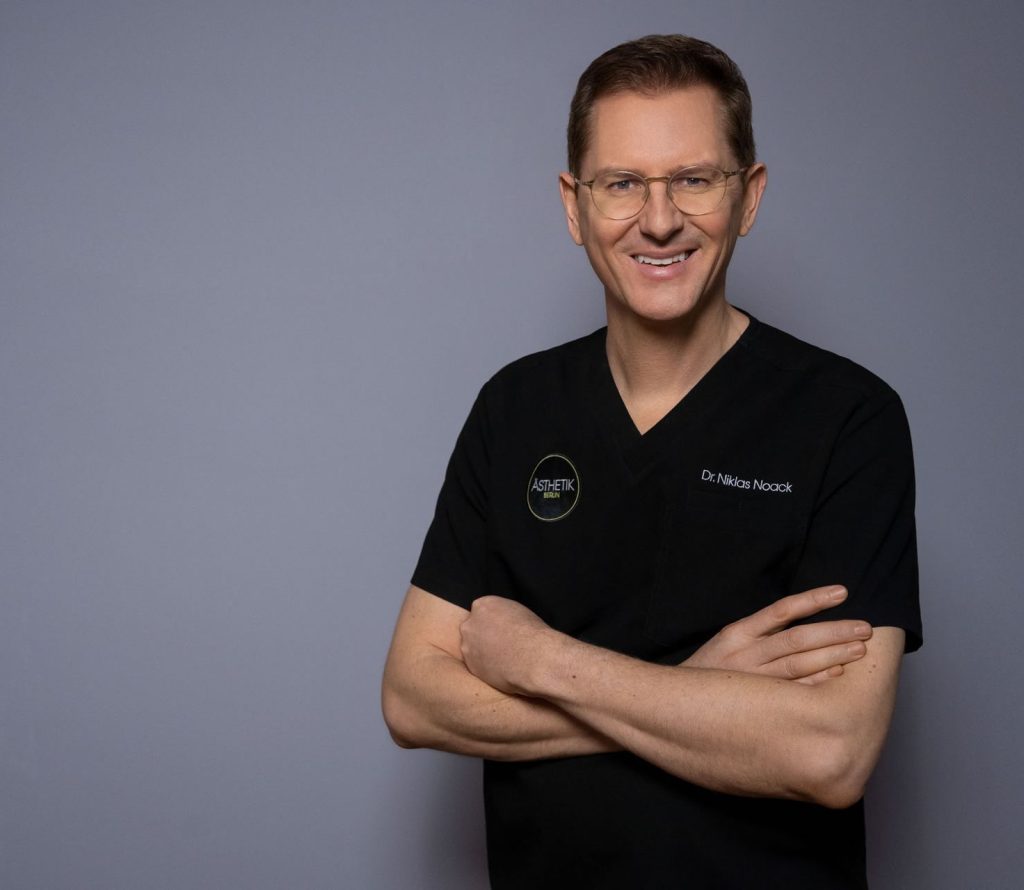
Personal medical assessment by Dr Niklas Noack
Frequently asked questions about dietary supplements and surgery
Does collagen really do anything for the skin?
For some people, yes – to a moderate extent. Collagen peptides can slightly improve hydration, elasticity and the appearance of fine lines. It is a preventative measure, not a miracle cure, and is no substitute for UV protection, sleep and a healthy diet.
Is vegan collagen just as good?
Vegan products are collagen precursors. According to the latest findings, they appear to work just as well as animal-derived collagen – although the effects remain moderate in both cases.
Does oral hyaluronic acid help with wrinkles?
It can subtly improve dry skin and skin texture. However, one capsule is not the same as an injection and does not restore lost volume.
Does biotin help with hair loss?
Only if there really is a deficiency. A blanket claim of „more hair for everyone“ is not credible. Important: Biotin can skew laboratory test results.
Can biotin affect laboratory test results?
Yes – these may also be important markers. Please make sure you mention if you have taken biotin before any blood test or before a planned operation.
Which dietary supplements should I stop taking before an operation?
As a rule of thumb, anything that is not medically necessary – particularly substances that promote blood flow (ginkgo, high-dose garlic, ginseng, high-dose turmeric), sedatives (kava, valerian, St John’s wort) and stimulating pre-workout products. Always consult your doctor first.
Which supplements increase the risk of bleeding?
In particular, ginkgo, high-dose garlic supplements and ginseng; as well as turmeric in high doses, highly concentrated camomile, fenugreek and hawthorn – often combined in detox and beauty blends.
Is taking omega-3 before an operation dangerous?
For most people, omega-3 does not automatically lead to bleeding problems. However, at high doses, it should be included on the list, and a decision is made on a case-by-case basis depending on the circumstances.
How long before the operation should I stop taking supplements?
This is often a few days before the operation until one to two weeks afterwards. The exact timeframe will be agreed during the pre-operative consultation.
What’s the easiest way to make sure you don’t forget anything?
Please bring a photo of all your products (including labels) to the consultation – medicines, supplements, herbal teas, pre-workout drinks, detox products and sleep aids.
Do supplements replace cosmetic treatments?
No. When it comes to genuine skin ageing or structural changes, medical or aesthetic treatments are the most effective solution – supplements are, at best, a complement.
Are you planning to have a consultation with Dr Noack about a procedure? Let’s discuss it.

Whether it’s collagen, biotin or those detox capsules from the bathroom: before an operation, it’s worth taking an honest look at everything you’re taking. At Dr Niklas Noack’s practice in Berlin, you’ll receive clear, personalised advice – to ensure a safe, sterile surgical environment and a good recovery – whatever the procedure.
Request a consultation appointment
Ästhetik Berlin – Dr Niklas Noack’s Practice
Alte Schönhauser Straße 23 · 10119 Berlin
Telephone:+49 (0)30 – 27 87 56 56 ·
E-Mail:office@niklasnoack.de
Book your personal consultation – we’ll also advise you on which supplements you should stop taking in the run-up to your procedure.
Medical advice
The information on this page is for general guidance only and is not a substitute for a personal medical examination and consultation. Never stop taking prescription medication on your own initiative. You should discuss with your treating doctor or anaesthetist on an individual basis when to take, the dosage of, and whether to stop taking any medication prior to an operation.
Do you have any questions?
I look forward to hearing from you.