Discover the possibilities of a radiant and rejuvenated appearance thanks to the latest facelift methods. As a specialist in plastic and aesthetic surgery, Dr Niklas Noack is an experienced specialist in this field who understands your individual needs and will provide you with expert advice. Arrange your personal consultation now to take the first step towards a refreshing change.
Brief information on the facelift
| Technical term | Facelift, deep-plane lift, HighSMAS lift |
| Goal | Rejuvenation of the face and neck (see also Neck lift) |
| Duration | approx. 5 to 7 hours, depending on effort |
| Anaesthesia | General anaesthesia |
| Hospitalisation | At least 1 overnight stay |
| After the operation | Wash hair, shower and bathe after removing the drains and head bandage after 1 - 2 days;
Make-up after approx. 1 - 2 weeks;
Hair colouring and perms after approx. 6 weeks;
Sport and heavy physical labour after approx. 6 weeks;
Sunbathing, visits to the solarium, sauna and steam bath after approx. 6 months; |
| Pain | Low to medium |
| Aftercare | Removal of the drains and the head bandage after 1 to 5 days;
Stitches, staples and plasters are removed after 7 to 14 days;
Accompanying lymphatic drainage;
2 to 4 wound healing checks; |
| Scars | Barely visible scars on the ear and hairline |
| Social and labour skills | After approx. 3 to 4 weeks (very individual) |
| Durability | 10-15 years |
| Risks | Asymmetries and mask-like facial expression;
Injury to nerve tracts with local signs of paralysis;
Injury to hair roots;
Shifting of the hairline;
Hair loss at the sites of the small skin incisions;
Dying off of skin (necrosis);
Unsightly scarring;
General operational risks; |
| Side effects | Swelling;
Bruising;
Temporary numbness;
Feeling of tension;
Sensory disturbances; |
Detailed description of the facelift
The facelift is a very popular method. In recent years in particular, the number of facelifts performed worldwide has increased enormously. Since 2019, there has been an increase in facelift operations of around 45 % worldwide (source: ISAPS Global Survey 2023). One of the reasons for this is that the methods we use are leading to ever better results that satisfy our patients. In this context, a buzzword has taken over the internet and gone viral in recent years: the deep plane facelift.
As there is a lot of confusion about the meaning of this term and the techniques behind it, Dr Noack believes it is important to explain the facelift, the background, the techniques and the best method for a deep plane SMAS facelift in more detail.
Podcast episode by Dr Niklas Noack on the deep-plane facelift
Facelift methods and techniques: Customised for the best results
Dr Niklas Noack uses deep-plane facelift methods and techniques to meet the individual needs of his patients. By combining these procedures, he achieves optimal natural results that are tailored to the unique wishes and conditions of each patient. Here we clarify some terminology:
SMAS (Superficial Musculo Aponeurotic System) Lifting: Tightening of the SMAS tissue layer in the face using so-called SMAS plicatures, which ultimately corresponds to a tightening of the SMAS.
Deep-plane lifting: refers to an SMAS lift in the deeper layers of the face, i.e. the SMAS is lifted and mobilised, not just tightened. The decisive factor here is the loosening of the so-called retaining ligaments under the SMAS in order to maintain a great deal of variability for a natural tightening during the operation. Dr Noack prefers the HighSMAS technique as a deep-plane facelift, which was popularised by the internationally renowned American facelift specialist Dr Timothy Marten from San Francisco.
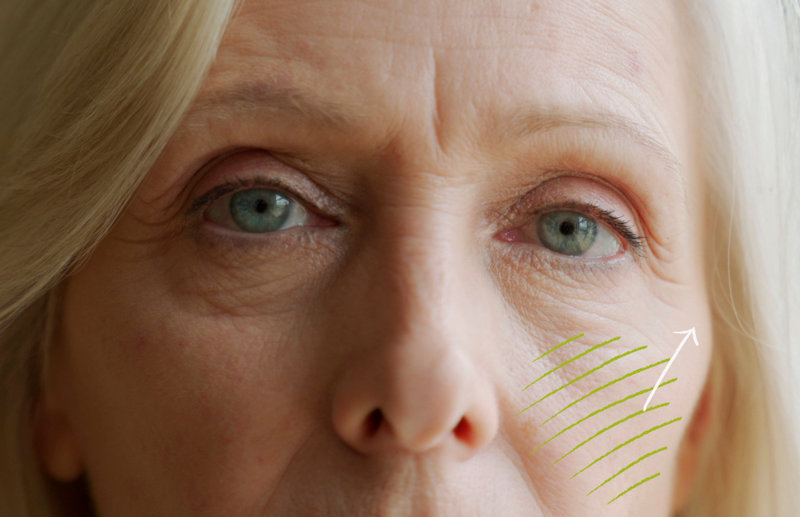
Midfacelift: Lifting of the cheek area under the eyes and next to the nose (the midface) to correct volume loss, sagging cheeks and the nasolabial fold. Often part of a facelift.
Temporal lift (brow lift, gliding brow lift): Tightening of the temple region to improve the lateral eyebrow position and reduce wrinkles at the temples.
Endoscopic or open forehead lift: Lifting and smoothing of the forehead skin to reduce forehead wrinkles and lift the eyebrows.
Face-neck lift or neck-jowl lift: Combined tightening of the face and neck using deep-plane techniques to achieve a harmonious and rejuvenating effect on the entire appearance, including the jawline (Jawline).
Deep-plane neck lift or deep neck lift: Tightening of the skin and muscles in the neck area to improve the contour of the jawline and neck and to reduce wrinkles and sagging skin. The individual anatomical characteristics of the neck are taken into account and any necessary treatment of the platysma muscles, the fatty tissue, the digatricus muscle and the submandibular gland is carried out to achieve the best possible result.
Endolift: This laser-assisted method is not a surgical facelift in the true sense of the word, but a technique for achieving shrinkage and fat reduction by applying heat to the tissue. The Endolift is performed without surgery under a light local anaesthetic and with minimal downtime.
Choosing the right facelift method is crucial to the success of the treatment. In my practice, I focus on selecting the optimal technique for each patient individually, based on their personal needs and wishes. My aim is to create a natural and harmonious appearance that emphasises the natural proportions and characteristics of the face without looking "operated on".
-
Dr Niklas Noack
Facelift procedure: The path to your facelift:
Procedure and preparation for optimum results
The success of a facelift depends largely on thorough preparation and individualised planning. Dr Niklas Noack attaches great importance to providing his patients with comprehensive advice and responding to their individual wishes and needs. The procedure and preparation are divided into several steps:
- Initial consultation: Your individual wishes and needs will be discussed in a personal consultation and your questions about the facelift will be answered.
- Examination and analysis of the face: Dr Noack will carry out a detailed examination of your face to identify potential problem areas and determine the most suitable methods and techniques for your facelift.
- Planning the operation: Based on the examination and your individual expectations, Dr Noack develops a customised treatment plan that achieves the desired results while ensuring your safety.
Thorough preparation and individualised planning are crucial for the success of your facelift. In my practice, I attach great importance to providing all patients with detailed and empathetic advice. I take individual circumstances and wishes into account in order to achieve the best possible results. This is the only way I can ensure that the facelift fulfils your expectations and at the same time achieves a natural and harmonious appearance.
-
Dr Niklas Noack
During the operation: precision and safety for outstanding results
Performing a deep-plane SMAS facelift requires the utmost precision and careful planning. Dr Niklas Noack ensures that you receive the best possible care and attention during the procedure. Here you will find information on the duration, anaesthesia and incision and technique guidance:
- Duration and anaesthesia: The duration of a facelift varies depending on the extent of the procedure and the techniques used. In general, a facelift takes between 4 and 6 hours. The operation is usually performed under general anaesthetic to ensure maximum safety and comfort for the patient.
- Cuts and techniques: Dr Noack selects the incision and techniques based on your individual needs and the result to be achieved. The precise incision minimises scarring and optimises the aesthetic result. The chosen techniques are designed to achieve a natural and long-lasting result.
During the facelift procedure, it is particularly important to me to apply the utmost precision and care in order to fulfil your wishes and achieve the best possible results. The individual selection of techniques and incisions is crucial in order to achieve the desired result and optimise healing. Patient safety and comfort are my top priority.
-
Dr Niklas Noack
After the operation: comprehensive aftercare for a successful recovery and long-lasting results
An important aspect of a facelift is careful aftercare to prevent possible risks and achieve the best possible results. Dr Niklas Noack accompanies his patients after the procedure and ensures that their recovery is optimal. The following topics are covered:
- Aftercare and possible risks: In order to recognise and treat possible complications at an early stage, Dr Noack will arrange regular follow-up appointments and professionally treat any complaints that may arise.
- Scars and healing process: Dr Noack explains how you can optimally care for your scars and which measures help to support the healing process.
- Long-term results: A facelift is a long-lasting procedure, the results of which can last for many years. Dr Noack will give you valuable tips on how to maintain your rejuvenated natural radiance and optimise the results of the facelift.
Aftercare is an essential part of a facelift and crucial to achieving the best possible results. I am always available to my patients and ensure that they receive the best possible care throughout the healing process. My goal is to help you achieve a quick recovery and long-lasting, natural and satisfying results.
-
Dr Niklas Noack
Testimonials: Trust in the experience and satisfaction of our patients
The testimonials and feedback from our patients are extremely valuable to us. They offer an authentic insight into the work of Dr Niklas Noack and illustrate how impressive the results can be under his expert care.
Before and after pictures:
In Germany, it is forbidden for doctors to advertise with before and after pictures. Nevertheless, you can see the impressive results for yourself during your consultation appointment at the practice and get an idea of Dr Noack's work.
I am very proud that my patients are happy with the results of their facelifts and share their success stories. My patients' satisfaction is my top priority and I always work to fulfil their wishes and needs. I am happy to show you before and after pictures of my work in the practice to give you a better understanding of my surgical expertise and the results that can be achieved.
-
Dr Niklas Noack
Costs and financing: transparent pricing and customised solutions for your facelift
The cost of a facelift can vary depending on individual needs and the techniques used. Dr Niklas Noack attaches great importance to transparent pricing and offers his patients various financing options:
- Facelift costs in Berlin: The cost of a facelift in Berlin depends on various factors, such as the method used and the extent of the operation. During your consultation, Dr Noack will draw up a precise cost breakdown that takes all aspects of the treatment into account.
- Various financing options: Dr Noack understands that the cost of a facelift can be challenging. That's why we offer flexible financing options to meet your individual needs. During your consultation appointment, you can discuss the different options that best fit your financial situation.
It is important to me that my patients are always well informed and know what costs they will incur. I attach great importance to transparent and fair pricing that reflects the quality and expertise of my work. I am happy to discuss the various financing options during the consultation to find individual solutions that will help you realise your dream of a rejuvenated appearance.
-
Dr Niklas Noack
Contact and advice: Make an appointment for your personal consultation with Dr Niklas Noack
To take the first step towards a rejuvenated appearance, we cordially invite you to contact us and arrange a consultation. Dr Niklas Noack looks forward to getting to know you personally and working with you to develop the optimal treatment plan.
- Contact informationYou can contact us by phone, email or via the contact form on our website. Our friendly staff will be happy to help you and answer all your questions.
- Possibility to arrange a counselling appointment: To make an appointment for a personal consultation, simply contact us via one of the channels listed above. We will endeavour to offer you a suitable appointment that suits your schedule.
- Location of the practice in Berlin: Our modern practice is centrally located in Berlin and is easily accessible by public transport as well as by car. You can find more detailed information on how to find us and parking options on our website or directly on Google Maps.
I cordially invite you to personally convince yourself of my expertise in the field of facelifting and to make an appointment for a consultation at my practice in Berlin. In a detailed consultation, I will answer your questions and help you find the best solution for your individual needs and wishes. I look forward to getting to know you and accompanying you on your way to a radiant, rejuvenated appearance.
-
Dr Niklas Noack
FAQ: Answers to frequently asked questions about facelifts: Find out from Dr Niklas Noack
Many questions can arise when deciding to have a facelift. Dr Niklas Noack answers some frequently asked questions here to help you get started. If you have any further questions, please do not hesitate to contact us or arrange a personal consultation.
Arrange your personal consultation with Dr Niklas Noack
The decision to have a facelift is an important step and we would like to support you in your decision as best we can. To arrange an individual consultation with Dr Niklas Noack, please use one of the following options:
Click on the "Arrange a consultation appointment now" button to go directly to our online booking system.
Our practice is located in:
Alte Schönhauser Straße 23
Our opening hours are from Monday to Friday from 10:00 to 17:00. We look forward to getting to know you personally and accompanying you on your way to a firmer and more aesthetic tummy.